
Meet the press behind our flagship.
Hydraulic pressing is cold pressing — and it is how every Merit Natural oil is made. Meet the real press, understand its slow squeeze, and follow your bottle from seed to seal.
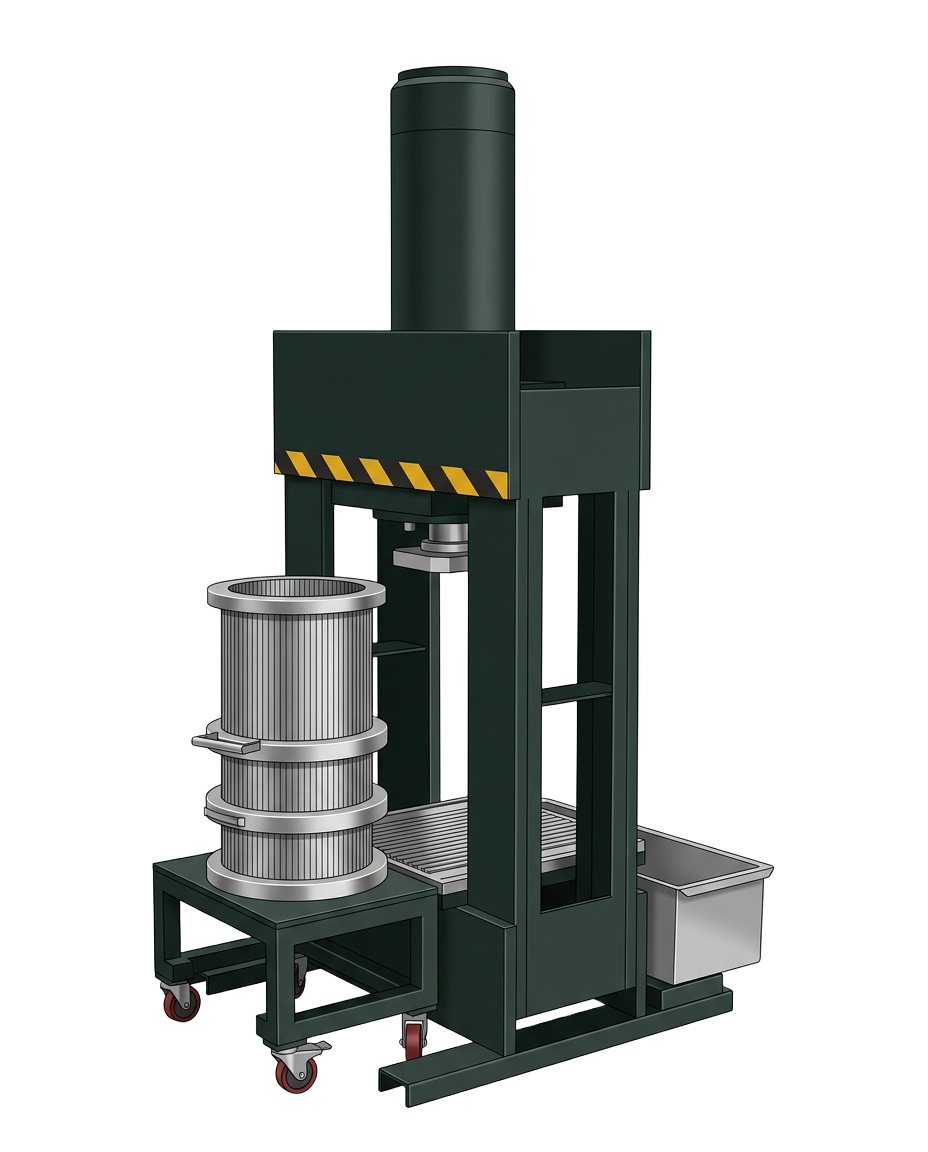
Our hydraulic press · Illustrated from the real machine
Cold-pressed.
The hydraulic way.
Yes, hydraulic-pressed oil is also cold-pressed. It is our premium flagship: whole seeds, slowly squeezed without added heat. Fluid-powered pressure pushes a plate onto the seeds to release their oil — rather than moving them through a spinning screw. Cold-pressed tells you about heat; hydraulic tells you how we press.
The press
Controlled pressure on whole seeds
Added heat
None — pressed at climate temperature
Extraction
One press, no reheating, no second extraction
After pressing
Natural settling, then bottling
The hydraulic range · seed to bottle
From seed to bottle.
Nothing unnecessary in between.
01
Carefully sourced seeds
Selected for quality, freshness and consistency.
02
Slow hydraulic pressing
One press, no reheating, no second extraction.
03
Natural settling
No shortcuts. No artificial interventions.
04
Fresh bottling
Packed with care and delivered with confidence.
Ask us about the process, pricing or availability.
Questions we get
every single week.
Is hydraulic-pressed oil also cold-pressed?
Yes. Every Merit Natural oil is hydraulic cold-pressed: extracted without added heat. Hydraulic names the mechanism — controlled pressure squeezing the seeds. Ask us about the method used for the oil you choose.
Why cold-pressed oil?
Because lower-temperature extraction helps preserve the natural characteristics of the seed — its aroma, colour and the nutrients that heavy refining tends to strip away.
Do you use chemicals?
No. Our oils are produced without chemical extraction, bleaching or deodorising. Seed in, oil out.
What makes hydraulic pressing different?
Hydraulic pressing uses a plate to slowly squeeze seeds under controlled pressure, rather than passing them through a rotating screw. Our flagship oil is extracted once, at climate temperature, without added heat.
How do I order?
You can place your order directly on WhatsApp. Our team will help you with pricing, availability and delivery — no cart, no checkout, just a conversation.
How should the oil be stored?
Store in a cool, dry place away from direct sunlight, capped tightly and away from the stove.
Is 'cold-pressed' a regulated term?
The term alone does not tell you which press was used or the temperature of a batch. Ask the maker how the oil is extracted and whether heat is added. We welcome questions about our oils and visits to our press.
Will this actually help my cholesterol?
We make no medical claims about cholesterol or any condition. Cold-pressed oils retain more of their natural nutrients compared to heavily refined oils, which is why many people choose to include them as part of a balanced diet. Any decision about your health belongs to your doctor and your plate.
Why not a wooden ghana / lakdi ghana?
A traditional ghana can be a valid cold-pressing method. It uses rotation, unlike hydraulic compression. Ask about seed quality, the actual process and batch temperature; do not judge the oil by the press name alone.
Can I cook Indian food at high heat with it?
Yes. Cold-pressed groundnut oil smokes around 215°C — plenty for tadka, shallow frying and everyday cooking. We don't recommend reusing frying oil, any oil.
How long does a bottle last?
Unrefined oil is alive, so treat it that way: keep it capped, away from the stove and sunlight, and finish within 6 months of pressing. Every bottle carries its press date.
Can I really visit the factory?
Yes, any working day at Loni Kalbhor. No appointment theatre. Watch your bottle being pressed, then take it home.
Come stand next to the press.
No appointment theatre. Any working day at Loni Kalbhor.